
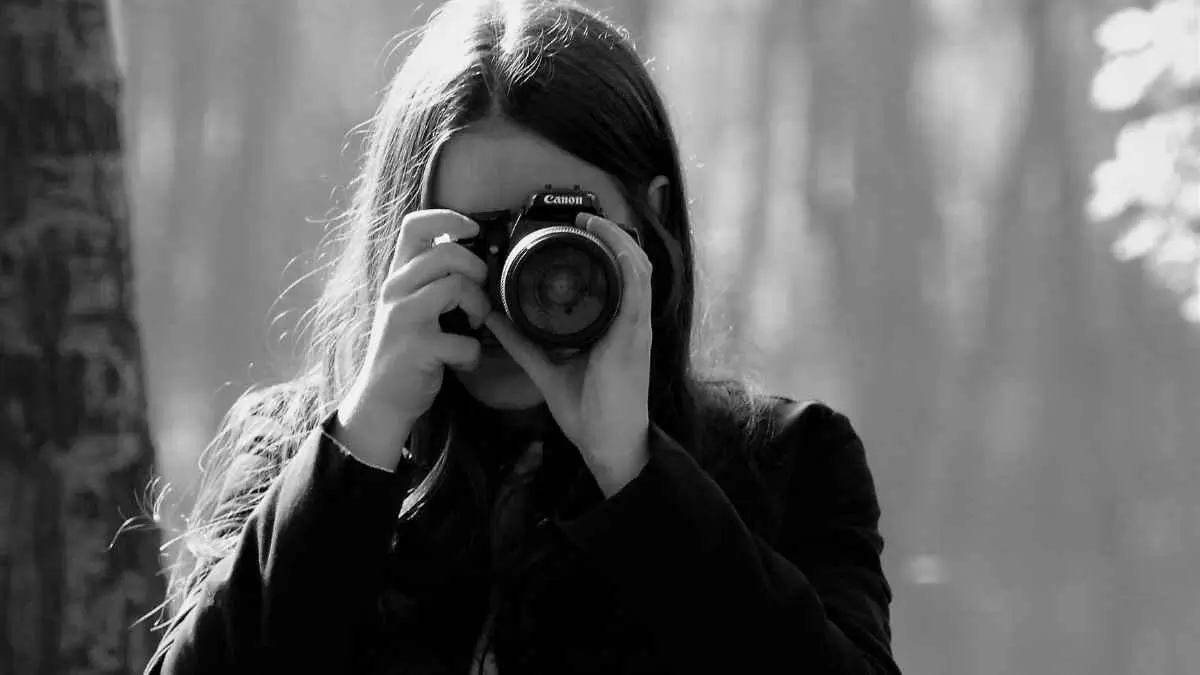

The Camera Is Only the Beginning
There is practically always a moment photographers face at the very beginning of taking pictures, that moment when you suddenly realize you had purchased a better camera but had not become any better as a photographer. The lens arrived, the sensor upgraded, the megapixels multiplied, and yet what came out of the very new body still looked somehow flat and ordinary and seemed somehow less than the photos that arrest your scrolling and take your attention away for a longer time than you had thought to give it to the image. That moment of reckoning is not a loss. It is, in fact, the real beginning of the photographic education, the stage at which a person stops waiting for the gear to do the work and instead begins accepting that the work originates from the mind. At the heart, photography is about a kind of perception, and the making of the photograph is an intentional and an intentional craft, that if done beautifully, it will speak volumes through the language of silence and the visual arts.
One cannot deny that for most cases, the progress of the photographic skills of an individual artist is measured not through the invoices which reflect the purchase of gear and accessories but it is in the accumulation of changes that happen quietly over time as the individual practices, learns through self-criticism, and opens up for acquiring skills that very few beginner tutorials or gear review videos even mention or discuss. The five keys that are shared below cannot be seen, nor are they tricks or loopholes. They are the principles that lie deeper that distinguish a photograph from a picture. These kinds of knowledge are typically kept without being mentioned as it would look obvious to a more experienced photographer yet is the case that a new photographer may need to do a lot of trial before discovering. Learn them early, practice them consistently, and watch what happens to your work.
Secret One: Light Is the Subject, Not the Scene
Every photographer at some point in their journey gets introduced to the concept that, photography really is writing with light. It is only after that they understand light, which is more than the conditions for taking the photograph – it is the subject! Your scene can be beautiful and the photograph can still be a failure. That moment when the shutter releases captures just one frame out of millions. It is because of this not the raw material that determines the quality of the picture but the character of the light at that moment – its quality direction color temperature, and the way it interacted with the scene.
This distinction is quite clear when explained to others though people find it hard to grasp it mainly because the human eye is such a good adaptor that most of the time we do not register drastic differences in lighting in the same way a camera would.On the contrary, a camera is completely devoid of adaptability. It is a faithful document of the light which either gets recognition of the photographer or reveals their ignorance. A photographer who truly recognizes light as the main element will definitely have a great sense of time and place. They can spot the difference with bare naked sun during the day, which tends to be very harsh, flat with not much shadows to your golden-hour type of sun, which tends to be very colorful, dramatic, and even helps to create dimension of a scene through a light shadow.
The weather conditions can be so different from each other – you can never have bad light, just different types of it – overcast means that it is soft, diffused and balanced kind of light which does a great job on a face and gets ride off shadows that direct sunlight usually casts on a face. Photographers get trained at a very early point to spot where the light is coming from just by looking at it. So that their subjects can be arranged in such a way that light will bring out the textures, contours, and expressions of these subjects and the photographer is trying to capture in the frame. The main thing that a photographer learns in photography is how to take pictures with no other equipment except a camera. The photographer has to wait because the scene has a lot of elements to it that can affect how light interacts with it. A photographer may wait a few minutes or even hours.
They are well aware that if a scene is lit up differently, then the whole scene is different. In fact, Ansel Adams from America, one of the great landscape photographers, once referred to his process as a form of visualization: first, seeing in their mind what the final printed image should be. His visualization was mainly about light. It’s really hard though to change one’s way of thinking and start seeing light first and not the subjects. But if one is able to do it, the photography results will come at much faster pace against the improvements in the photography gear one can only expect by making purchases.
On the practical side of things, the whole light subject matter is a set of habits that even most beginners dislike doing. It means getting up and shooting early in the morning when other people are in bed. Also, it means making multiple return visits to the same place under various weather and seasons because one knows that the same place photographed last week in flat midday light has a completely different photo at seven in the morning in late October. Also, it is all about the knowledge of making use of artificial light. No, of course it is not only pointing your flash at the subject but also being able to shape diffuse bounce, and layer different light sources to create a painting-like quality similar to that of natural illumination. Finally, it refers to a photographer with discipline and a lot of patience to know that on occasions it’s just too dark to take good shots of a scene that one would be proud of later on and also to the one who knows how to keep the camera away and wait until the light gets better.
Secret Two: Composition Is a Language You Must Learn to Speak
The rule of thirds is likely one of the very first compositional rules a budding photographer comes across. Still, while it Definitely is a good starting point, to a lesser degree, it could also be regarded as the enemy of one’s creative development. When a photographer resorts to the rule of thirds as their only technique, they end up with images that may look well-crafted visually but emotionally flat. Such images are the kind of photographs that fit comfortably within the frame without any sort of tension, surprise or dynamism. In fact, the ultimate secret behind composition is that it refers not to a set of guidelines to be followed but a kind of visual language that one needs to master, a set of rules through which one conveys feelings, tells stories and expresses ideas through an orchestrated layout of the various components of the frame. As with all languages, the real mastery comes when one goes beyond knowing the basic vocabulary to understanding the subtleties of syntax, rhythm and persuasive expression.
The photographers who create images from their instinct rather than following mechanical techniques are the ones that have spent their time not only studying photographs but also artworks movies buildings and designs, all those areas whose practitioners have been concerned with arranging 2D spaces for a quite a bit higher percentage of their history than has been the case with photography. These photographers are well aware that every element inside the picture, like where the horizon is, at what angle a directing line is pointing, how close a foreground item is to the camera and how much negative space is surrounding the subject, is a choice, and every choice made has consequences. These photographers are aware that placing a subject exactly in the center of the frame could be an unconventional and even quite radical decision, when done intentionally, as it will create a sense of symmetry and head-on frontality that is so strong that the off-center placement is hardly able to achieve. They also realize that picture-after-picture frames, a door, a window, an arch, or even a tree branch, can enrich a composition with multiple contexts, depth and intimate touch, leading the viewer’s eye further into the image. These photographers know also that one of the strongest tools in composition is often simplicity: the technique of removing everything that is extraneous until what one is left with is precisely the thing the image needs to express its message.
Being at the camera is not the same as being a good composer. Most photographers do not relish composing without the camera and instead prefer to shoot and then compose later. Still, the best thing to do before you raise the camera to eye level is to take thirty seconds – perhaps a whole minute – to observe the scene and ask the question – what is the photo really about? Not literally, but metaphorically, as in what is it that the subject wants or the photographer is showing? Figure out the leading visual element and construct the photograph composition that highlights that element. Try the simple thing: change your physical position.
That you change the physical position of the camera about the subject – whether you are on the low side or high side, at a short or long distance, shooting directly at the face or diagonally, all contribute a whole new dimension of character and mood to your photograph in many ways and more effectively than by changing the lens. For example, you get a whole new picture just by squatting down and then looking up or changing your viewpoint to the very left or side. The idea of the composition of the photo can’t be achieved by photo-editing tools, it has to be done at the time you actually take the pictures or before. And only the photographers with whom you would feel serious about those 10 seconds before taking the picture and who wouldn’t just shoot and make up for it later, have photos that really look different from the rest of the photographer work who just raise the camera and “fix it later”.
Secret Three: Technical Mastery Is Freedom, Not Constraint
A prevalent myth that circles around artistic communities, from music, photography to writing and painting, is that acquiring technical skills somehow stifles artistic freedom. One hears frequently from the proponents of this line that learning rules is a method of cramping one’s imagination rather than liberating it. They maintain that the finest pieces of art are born from intuition, spontaneity, and free from getting bogged down by the technicalities of such photographic terms as f-stops, shutter speeds or ISO values. Such is the logic that gives rise to the mythology – no one wants to be a technical person when he is trying to be an artist, and yet it is exactly the other way. Using practically every photographer’s experience of those who genuinely achieved artistic excellence, this belief is completely backwards.
Creative work without the knowledge of technical fundamentals cannot be real. On the contrary, one’s mastery of technique gives a solid foundation to creative expression. To put it differently, creativity is freedom after constraint. When a photographer is forced to think about say lighting up a backlit subject or how to get shallow depth of field or how to freeze motion or render it with a silken blur or how to handle noise in a low-light scene, he takes away precious mental space which then can’t be utilized for looking, watching, and reacting. That the exposure triangle, ie. the relation of aperture, shutter speed, and ISO, is not a formality but a vital part in the grammar of the photo-sentence. Once you master it, you move from a translation mode to pure thinking in the language. Seeing an evening light fall across someone’s face, and the camera settings have already been changed in your hand before you have even consciously processed the situation you’ve just come across.
It’s one thing to know the technical aspects, and another to be able to apply them without even thinking about them when creating images. The most important thing is to get those skills so well embedded so that one can focus on other aspects of photography besides just the nuts and bolts of the camera. The only way to reach this level of mastery is very simple in principle and very hard in practice: take pictures only in manual mode until you automatically set all parameters. Take a histogram and not your preview picture as a guide since objectively histograms reflect the real exposure while previews are very attractive when you first see them but are actually just images that have been lightened by the camera so that one can still see them in the darkness of the dark room setting. Learn Ansel Adams’ “zone system” for the development of film and recognize how the underlying principles translate to the digital sensor that you are using. You may also want to examine the interactions that occur between focal length and depth of field, aperture and diffraction, as well as ISO performance and the specific characteristics of your image sensor. Such efforts do not have their glamorous features, although they are essential and act as a basis that, when the technical aspect of the photographic craft is no longer there because the artist has mastered its language so deeply that it no longer even feels like work, the artistic and creative aspect will truly be in full bloom.
Secret Four: The Edit Is Half the Photograph
Photography has always embraced a process going way beyond the moment when the shutter is released. In the age of developing pictures in a darkroom, Ansel Adams used to characterize the negative as a musical score and the photograph as the performance, a formulation that openly admitted the finished work of art, the photograph, was not at the moment of capture complete but came after a conscious process of interpretation, refinement, and craft. The modern-day counterpart to this darkroom operation is post-processing and there still are the photographers who think of doing any such thing as cheating and, because of this, only see such a treatment as a somewhat reluctant afterthought which they never really like, thereby creating only a half-finished picture.
Top-rate professional photographers from every walk of the genre, landscape portrait documentary fashion commercial, spend the same amount of time being careful and thoughtful when it comes to post-processing as when taking the actual photograph. They are aware that the picture that gets into the camera is just a rough interpretation of the scene and that the post-processing is the place where the photographer’s original idea that had a moment of time, a snapshot of looking at life, gets actually and completely embodied in the image itself. Correcting exposure, reclaiming shadow areas, dealing with highlights, fine-tuning white balance, adding contrast and clarity, eliminating distracting elements, and making black and white conversions do not involve any act of deception. Instead, these steps represent acts of finishing, the stage that concludes your artwork which actually started at a moment that the photographer had a camera in hand and a decision about the way of seeing the world in front of the eyes made.
What is behind the secret is editing skill that starts with the click of the shutter is only a part of the story! Photographers who know about retouching take different photos, they do the exposure protection of highlights as they know they will be able to restore shadows more easily than the blown out highlights, they think about the final picture during the shooting, and not hope that they can somehow fix the problems by editing, which could have been prevented altogether. They also develop a unique editing style that is a visual hallmark of their work, it’s not just the repetitive use of a preset but the conscious aesthetic choices about color, tone and mood in the images that go right through the whole body of their work and it helps to pick out their images even before you know the names are attached to them. You can’t even find such a visual signature on the Internet.
It is something you figure out by honestly and extensively editing a great body of works, which you gradually do over a long time. This is how one gets acquainted with what they love and what they don’t, and the post-processing principles they create are really their own only at that moment. This in practical terms translates to devoting serious amount of time technically studying the post-processing software, whichever it may be Lightroom Capture One, or Photoshop for example – same as you do for learning your camera. It’s the same level of dedication.
It’s not showing off all the shots taken; rather it is being highly selective. A great photographer must recognize the best ten photographs they made out of five hundred to do so not only does he/her demonstrate that he/she is a discerning and selective person but it is really a step towards becoming a fine photographer. It is the process of picking images and selecting for presentation where an editor really comes into their own. You must, first and foremost, study a master photographer’s retouching work and analyze the decisions that they make about how to adjust the tone, contrast, and color to create an emotional feeling that is their signature. That’s the way you understand and appreciate that photographer’s distinct work. The final touch is not the stage where the photograph gets saved. The photo is completed there.
Secret Five: The Best Photography Comes from a Point of View
A photographer should ask themselves their own photography work the very first thing a photographer should ask a photographer: it is a question of content: a photographer must get an answer to that. If a photographer simply is a good and timely photographer who was in the right place at the right time, that photographer is of course not among those whom we know by photographing.
A photographer’s main message is not simply his/her style, but it is not even style. It is even more than style. It is the photographer’s philosophical position toward the subject and the world, the photographer is led to select a photograph, the way it is framed, the viewer is intended to react toward it etc. based on a particular set of values beliefs aesthetic tastes, and emotional weights. Henri Cartier-Bresson’s concept of the decisive moment did not express his composition philosophy only, it was a representation of his deep conviction that, by being present and being able to be fast enough, a photographer will catch life’s moments when they reveal themselves at depth.
Discovering your personal voice in photography can’t always be learned through a direct or rapid method. It is an outcome of the life one lives, the books one reads, the people and places one looks at, the thoughts one has, and the photographs that one takes with true interest and openness over a long time. It involves you delving into the difficult matter of finding out why you are attracted to some topics while others don’t resonate with you at all, what sort of feelings your photographs would bring about in a viewer and are the images you are making a real manifestation of yourself or are you trying just to imitate what you think makes a good photograph? Perhaps the best photographic activity that a photographer could get involved in is getting a hundred of his or her own pictures spread out and asking himself/herself what feature unites them not from the aspect of technological skills but the emotional/psychic and thematic aspect of the work. The response to these questions no matter how unusual or strange it sounds will reveal quite a lot about what kind of vision or perspective the photographer already naturally holds and is only waiting to actively claim and build on. Among those photographers who engage in this work, being truthful about their creations while fearlessly inquiring as to the meaning behind them, are the ones who will eventually produce the works of art so unique that one will be totally convinced nobody in the world would have come up with them apart from the photographer. Bottom line, this remains the ultimate goal of photographic art: not only making great photographs, but creating pictures that could have come from no one else but you.
The Photograph Still Ahead
These secrets will show you the way but will never be your destination. Every one opens a door to a different aspect of photography that will be richlyrewardedifyou commit yourself to it with passion and perseverance. Such a dimension will offer you many challenges, new things to learn, new things to do, new insightsto get about the contrast between the world as it is and the world as you see it through a viewfinder. Light composition technical mastery, post-processing, and personal point of view are not five separate items ticking off the accomplishment list. Rather, they are five aspects of one cohesive way of working and when you nurture them in concert with each other this in truth, is what the photographic life at its height looks like
Great photographers are the ones who create the photographs that make people take a second, longer look even when they can only scroll. They were not handed the secret key on a silver plate. They earned it with countless hours, with the power of patience, with their readiness to critically analyze photos from an emotional, spiritual, and physical perspective without being blinded by the technical perfection, and to honestly admit that an image just wasn’t any good. After this self-exploration phase, it is time for more difficult questions: why this failure, what caused it? They first saw light as their language, before they even began learning anything else. They learned to use deliberate composition instead of going with their gut feeling. After getting to know the ins and outs of their cameras to the point where it felt like an extension of themselves, they started creating without the limitation of physical medium. It is through the editing process, not in the capture and print stages, that their images get their finishing touches. Finally, in a very quiet, personal way, they got to know themselves, as visual thinkers, and only after that did they dare to put that knowledge out there.

Specialized Contributor-
Fashionista Loves is a fashion and lifestyle enthusiast passionate about exploring the latest trends in style, beauty, luxury, and modern living. With a keen eye for emerging fashion movements and timeless elegance, they create engaging content that inspires readers to express themselves with confidence. From designer collections and celebrity fashion to beauty tips and lifestyle insights, Fashionista Loves brings fresh perspectives to the ever-evolving world of fashion.